
The why of fear – Part 1: A cold day’s run . . .
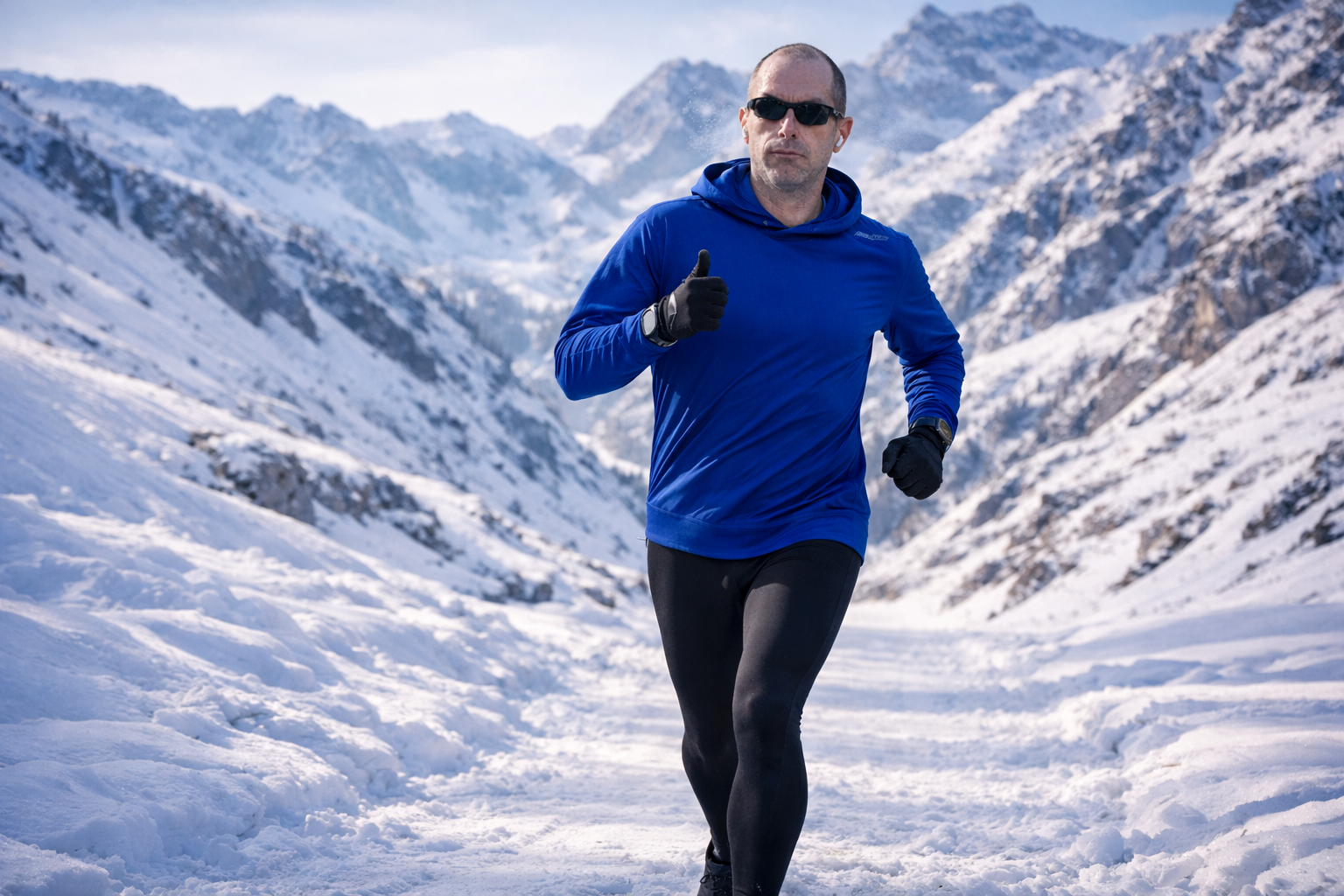
Photo generated with the assistance of AI
For various reasons, over the past few months I’ve spent a lot of time and energy focusing on the concept of fear. It may have started with all the hype over Alex Honnold’s live free solo climb of Taipei 101, but it became a deeper focus after some recent runs I did in the bitter cold this winter. I’ll share more on that in a bit. But first, regardless of the trigger, fear has become somewhat of an obsession of mine lately. So much so, that when I first thought about writing more on it, I felt like I needed time to sort out my thoughts. After all, I already wrote the simple version of my overcoming fears post in, “Do one thing every day that scares you.” While that blog was about my experiences overcoming fears and the need to get out of my comfort zone, what I believe is missing – and what has been starkly on my mind lately – is the why. Why it is so important to me to overcome fear? This is part one of the answer, and it begins with the story of my runs.
A fear of running in extreme cold . . .
This winter has been brutally cold – certainly in comparison to anything I remember over my 18+ years in New York City. Add to that the fact that I’ve only been running during the colder months last few years, and this is something I have not experienced.
I’ve always had my limits on the temperature. Never below 20 degrees. I’ve run in the mid-20’s while freezing my ass off, and that seemed to be just about all I could handle. I couldn’t possibly run in anything much colder. Especially when the other runners I know have been telling me they stay inside. I should mention I hate treadmills. I’m not afraid of them. Just incredibly bored.
When the first cold spell came a few weeks ago, and it was 13 degrees with a single-digit windchill on the day of my long run, I used that day as one to remind me that I don’t have to do every run. I saw a few others outside running that day and realized people do this. I wondered if I should give it a shot, but it was important for me to prove that I can take a day off. Besides, it’s only ever that cold in New York for a few days a year, at most. As the extreme cold continued throughout the week, I found comfort in skipping my runs.
The forecast was no better the following Sunday for my next long run day, and this one was scheduled to be a race day. The forecast for the Manhattan 10K was for a windy 12 degrees with a windchill below zero. The week leading up to the race was stressful. I really wanted the credit for this one, as it helps me get into some key races next year. But I was dreading the conditions. I spent the week trying to get my head in the right space to do it. I could always turn around and head back home if it felt too cold, and I could quit if it was too painful. A taxi is only a block away. Ok, I was ready. Then came the news on Friday afternoon that the race was cancelled – and I could automatically get the race credits. “F*&k yeah!”
And then it hit me. I got so comfortable skipping any extremely cold runs that I became even more afraid of them. Sure, most runners skip these days, but I see others out there. It’s not insane to run out there, but it’s scary. Still, I had spent the week preparing myself mentally for the challenge. The race may have been cancelled, but there was no way I could pass up this moment of facing my fear.
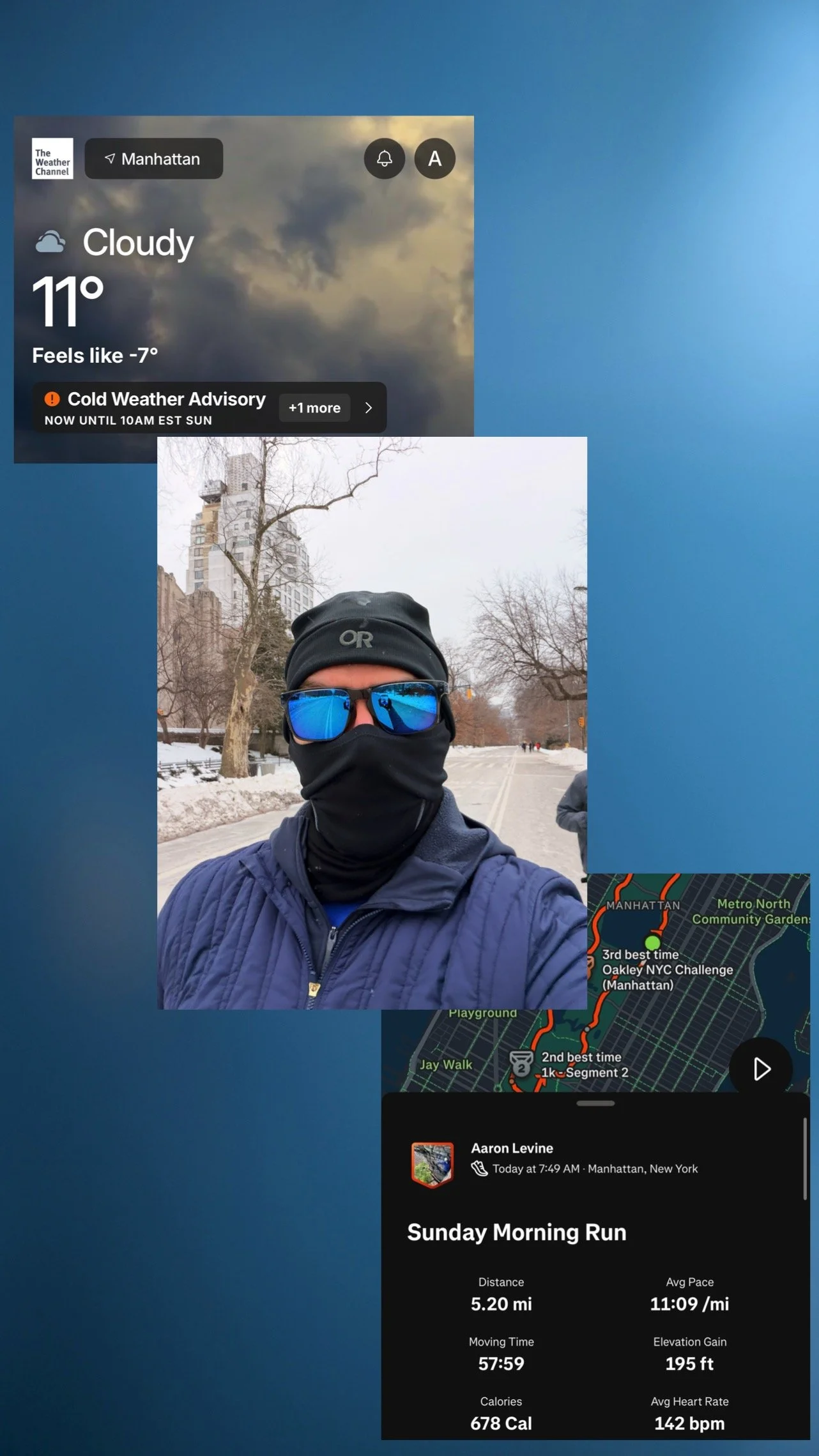
As I headed to the park on Sunday morning, even just a bit earlier than I would have gone to the race, it was 11 degrees and the windchill was -7. I was well-layered and well-covered, even with a balaclava to cover my face. I asked myself on the way there if I should turn around, but I was ok for now. I did my stretches on the way and lightly jogged to stay warmer, all while carefully keeping my eyes on the ground in front of me for ice. I wasn’t just afraid of the cold — I certainly feared falling again too (see my prior blogs if you don’t know).
When I arrived at the park, I was ready to give it a shot, knowing that a taxi was only a block away. That though stayed with me for the first minute or two when I then began to imagine being in the middle of the mountains with no taxi to rescue me. Just me and the cold, and I had to keep moving. I found so much peace in that image that it stayed with me as I completed the rest of the five-mile run – even after my water bottle froze mid-way through it. As I finished the lap, I thought about going longer, but (1) the water thing, and (2) my fingers were starting to freeze. It was time to stop and call it a win.
The run wasn’t about how far or how fast I ran. It was about finding out if what I was afraid of was worth being afraid of. You see, for me, fear still has its place. The fear of falling made me careful. The fear of freezing helped me dress properly and devise an escape plan. And the fear of declining in my fitness is part of what got me out there in the first place. But what mostly got me out there, and what got me through the run, was the fear of doing it. When I finished, I was stripped of that fear in time for many more similarly chilly days ahead!
Now the why . . .
As I said in the beginning, this series is not just about my journey overcoming fears, it’s about the why. Why was it important to be stripped of that fear? The answer – I mean answers – to that are why this must be written over several posts. There are many reasons; each worth examining further. Each time I tackle a fear worth overcoming, it primes me to take on the next one. It helps me better understand which fears are worth facing and which ones might not be. It provides me with clarity as to the difference between fear and anxiety and how to best use the former and control the latter. It makes the uncomfortable comfortable, it makes the winter less depressing, and it makes me better at things – in work, life, and fitness. It prepares me for the day I don’t get to choose whether to face a fear or not. I did this one voluntarily, but we all face moments in our lives that force us to confront what we wish we didn’t have to. We train for those moments by learning the skills of overcoming. But most of all, for this run, it was important to remove that fear because life is better without it.
Aaron
More to come in Part 2 of this series . . .